
Servicing FOB Lines
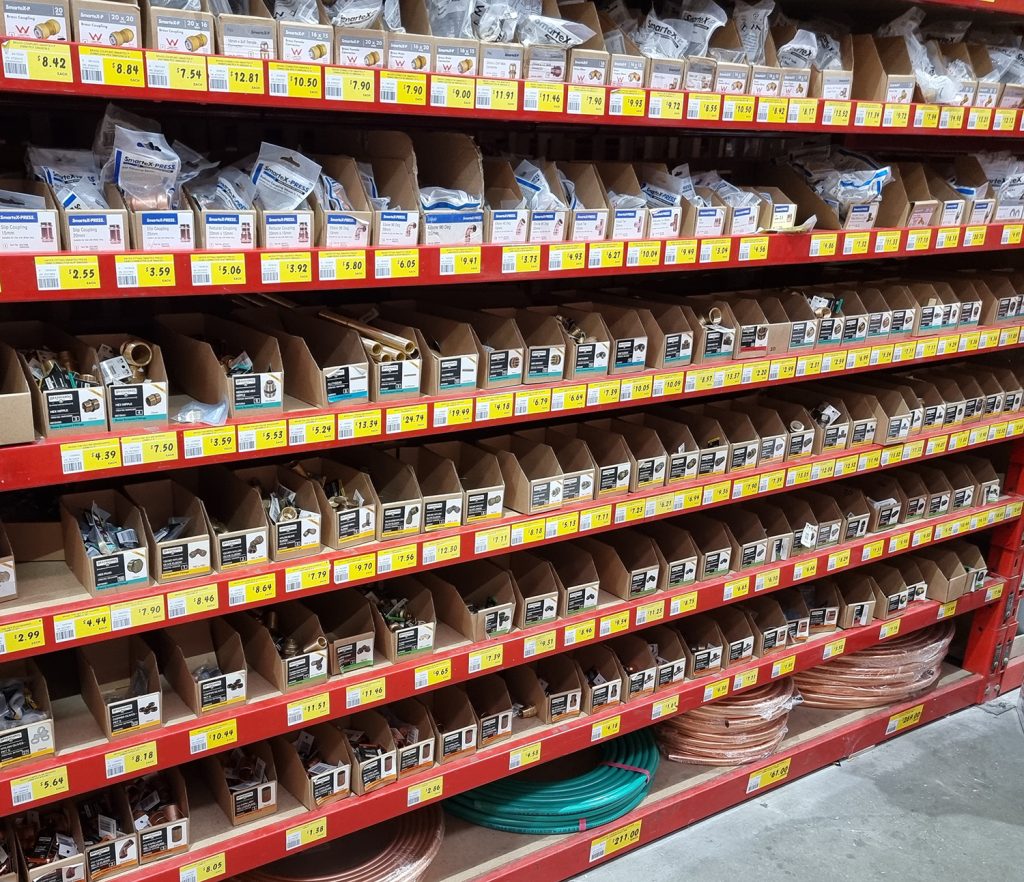
Bunnings and similar big-box retailers often categorise products into two types of supply arrangements: VIS lines and FOB lines. VIS (Vendor In-Store) lines are those where the supplier (or their merchandising agent, like us) is responsible for maintaining the stock in-store. FOB lines (Free on Board) are products that are theoretically fully maintained by Bunnings team members. The Bunnings’ agreement doesn’t require suppliers to service FOB stock. However, many suppliers have found that providing extra attention to their FOB lines can pay dividends in better shelf presentation and higher sales. And Bunnings buyers certainly don’t mind the additional support. That’s where we assist clients by giving their FOB products some extra attention, even though it’s above and beyond what the retailer mandates.
When we service FOB lines for a client, it might be on a periodic or as-needed project basis. Here’s what we typically do on those calls, using an example of a client in the plumbing category:
- Remerchandise and Organise: We start by auditing the shelf where the FOB products reside. As store staff are busy with many duties, FOB sections can become a bit disorganised over time. We identify any mislocated stock – items that might have been placed in the wrong spot or mixed up – and relocate them to the correct locations according to the planogram. Proper organization is key for both shopper experience and accurate stock counts. We also take note if the planogram itself isn’t being followed (maybe an item is missing facings, or an entire SKU is in the wrong place) and correct those where possible.
- Stock Rotation and Filling: Just as in VIS calls, we pull down the reserve stock from overhead or other storage (known as “hand stock”) to fill the shelf. For FOB lines, store staff might not always get to this promptly, so our extra hands make sure the shelf is topped up. We rotate items if there’s any older stock (ensure first-in-first-out). By having more of the product on the shelf (and neatly arranged), we increase the likelihood of sales and reduce the chance of an item sitting unseen.
- Shelf Maintenance: Small hardware items are often displayed in shelf-ready packaging or boxes. We replace those shelf boxes or trays as required, especially if they’re damaged or too worn. We also check the shelf labels. If any are missing or faded, we organise the printing of new ones. We then place them correctly.
- Optimize Shelf Space: A big part of our FOB service is looking at space allocation. Working with the supplier we may find opportunities to decrease facings of slow moving lines to make space for more facings of high volume lines. Increased facings help keep stock level up and provide more real estate to catch the eye of customers.
- Reduce Overhead Stock Dependence: By optimising shelf space we can minimise the dependence on overhead stock. This reduces the effort and frequency of dropping stock and decreases the chance of a missed sales due to inaccessible stock.
- Unsaleable stock: We hunt for any items that are damaged, or otherwise not in sellable condition. These sometimes languish on shelves because no one has claimed responsibility to remove them. We will remove those items from display and flag them for action by Bunnings staff such as markdown or disposal. Clearing out junk ensures good product is front-facing and more importantly replacement product is ordered.
- Engage with Store Team: While working on FOB lines, our team also engages the Bunnings department team members. Explaining that we are here to help with their workload fosters cooperation. We might even learn from them about any recurring issues which we can pass on to our client as valuable feedback.
- Overall Goal: As we finish a FOB service call, we aim to raise the presence of the brand on the shelf and with Bunnings Team Members. Essentially, after we’re done, the brand’s section should look spotless, fully stocked, and well-organised. This increases sales due to better presentation/availability and leaves a positive impression on the store staff and the Bunnings buyers. We often hear that buyers are supportive of the extra resource put in by suppliers on FOB lines, and suppliers see the payoff in sales. It’s a classic case of going above and beyond the minimum to achieve superior results.
Example: One of our clients, Brasshards, periodically engages us to service their plumbing products that are on FOB supply. During those calls, we executed exactly the tasks above – tidying up the Brasshards fixtures, ensuring all their tap parts and fittings were in order, and expanding facings for popular lines. The difference is noticeable: not only do the shelves look more appealing, but Brasshards has reported improved sales in periods following our special visits, validating that this extra attention delivers ROI.
In summary, servicing FOB lines boosts parts of the store that would normally only get basic attention. It’s not mandated, but when done, it can set a brand apart. We pride ourselves on offering this as part of our “core business” – providing in-store inventory management service on behalf of clients, whether VIS or FOB. By treating FOB lines with the same care as we do VIS lines, we help our clients capture additional sales that might otherwise be lost, and we strengthen their relationship with the retailer by helping maintain excellence in the aisle.